
2026 EMBO Workshop on Autophagy: foundations, functions and physiology
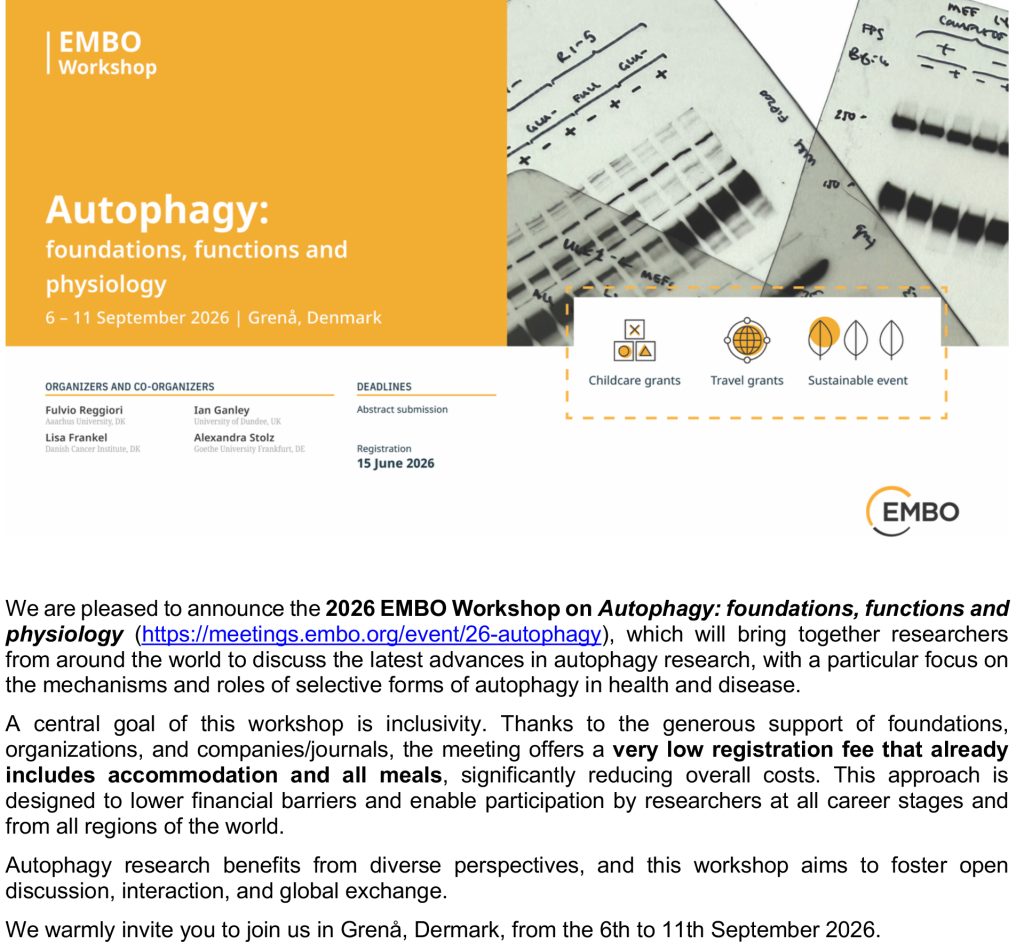
Date: September 6th – 11th, 2026
Place: Grenå (Denmark)
Autophagy plays a central role in maintaining cellular quality control and homeostasis by degrading dysfunctional or excess structures and organelles. It also regulates various cellular and organismal functions, including metabolism, immunity, and cell differentiation. While the mechanism by which autophagy-related (ATG) proteins mediate the formation of autophagosomes has been delineated, the molecular interactions between different functional groups of ATG proteins, lipids, and other intracellular compartments remain poorly elucidated. Additionally, although autophagy has traditionally been considered a bulk process, a series of groundbreaking discoveries has revealed that, in most cases, it operates in a highly selective manner to eliminate unwanted structures. This has led to the identification of selective autophagy receptors (SARs) and provided insights into how they interact with and coordinate the ATG machinery. While much remains to be uncovered, this knowledge now allows for the precise modulation and monitoring of different types of selective autophagy. Researchers can now investigate how each form is regulated and how it contributes to the homeostasis and function of specific tissues and organisms, as well as their adaptability to environmental and developmental cues. This EMBO Workshop will explore the latest advances in the mechanism of autophagy, with a particular emphasis on its selective forms.
Registration deadline: June 15th 2026
More information here
Women In Autophagy (WIA) 7th Annual Symposium Webinar
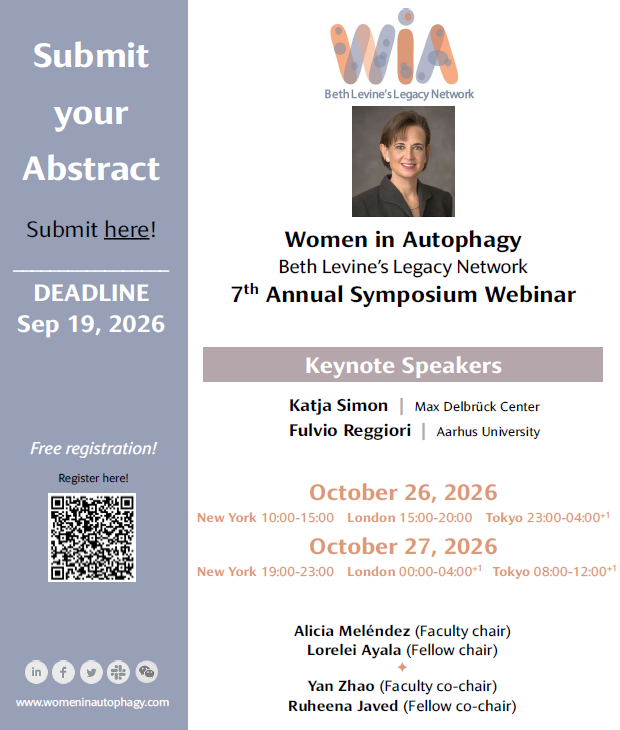
Date: October 26th – 27th
Webinar
Join us for the 7th Annual Symposium Webinar of the Beth Levine Legacy Network Women in Autophagy.
The symposium will be held on:
Monday, October 26, 2026 (New York 10:00–15:00, London 15:00–20:00, Tokyo 23:00–04:00+1)
Tuesday, October 27, 2026 (New York 19:00–23:00, London 00:00–04:00+1, Tokyo 08:00+1–12:00+1)
Register for the WIA 2026 Annual Symposium here
Abstract submission for the WIA 7th Annual Symposium 2026
Submit your abstract here by September 19th
SEFAGIA Meeting 2027
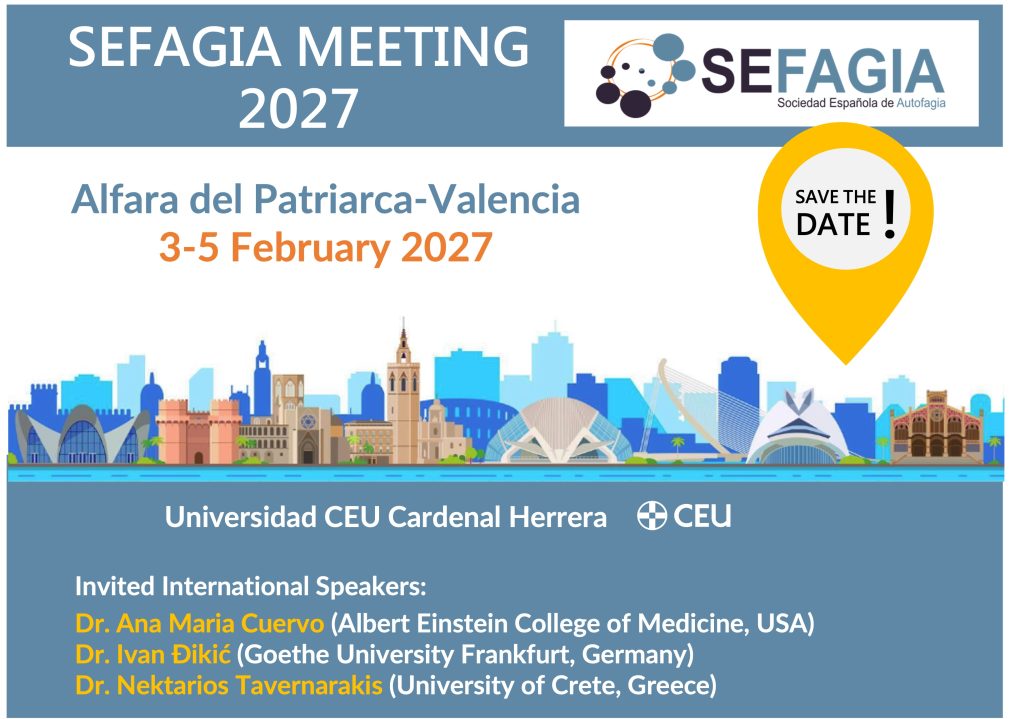
Date: February 3rd – 5th, 2027
Place: Alfara del Patriaca (Spain)
We are delighted to announce the upcoming SEFAGIAMeeting, taking place February 3–5 2027 in Valencia, Spain
This meeting will gather researchers in autophagy and related fields for several days of cutting-edge science, collaboration, and networking in an inspiring environment.
Confirmed invited international speakers:
▪️ Dr. Ana Maria Cuervo (Albert Einstein College of Medicine, USA)
▪️ Dr. Ivan Đikić (Goethe University Frankfurt, Germany)
▪️ Dr. Nektarios Tavernarakis (University of Crete, Greece)
More information here
2027 Keystone Symposia - Autophagy in Health and Disease: From Mechanisms to Therapeutics
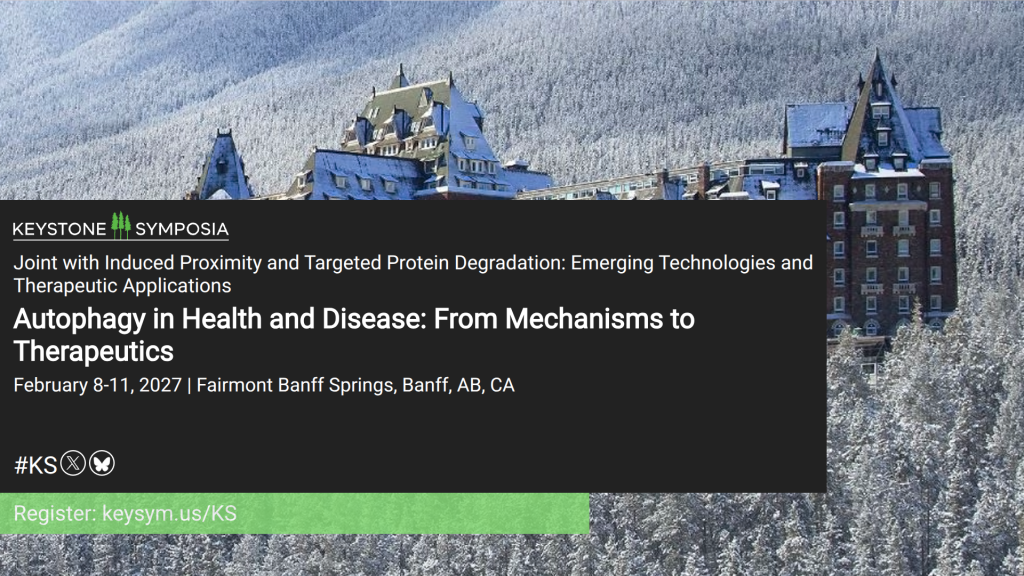
Date: February 8th – 11th, 2027
Place: Fairmont Banff Springs, Banff, AB (Canada)
Autophagy is an evolutionarily conserved catabolic pathway that plays pivotal roles in cellular stress response and homeostasis maintenance. Its dysregulation is implicated in the aging process and diverse pathological conditions including neurodegenerative diseases (Alzheimer’s, Parkinson’s, Huntington’s), cancer, metabolic syndromes (diabetes, obesity), and infectious diseases.
Substantial progress has been made in elucidating both the core autophagy machinery and systemic regulatory networks. Particularly noteworthy are the mechanistic insights gained into selective autophagy pathways — including mitophagy (mitochondrial degradation), ER-phagy (endoplasmic reticulum turnover), and aggrephagy (protein aggregate clearance) — which have illuminated the molecular basis of cargo recognition and sequestration. Recent research has significantly expanded our understanding of autophagy’s physiological repertoire. Furthermore, recent studies on non-canonical autophagy pathways have uncovered their participation in diverse biological processes ranging from plasma membrane repair to antimicrobial defense and viral infection cycles.
Therapeutic exploitation of autophagy has emerged as a promising frontier, with innovative approaches like autophagy-targeting chimeras (AUTACs) enabling precise degradation of disease-causing proteins and organelles. This conference aims to synthesize current knowledge of autophagy mechanisms, functional diversity, and regulatory networks, while exploring their implications for understanding disease pathogenesis and achieving clinical translation. Through interdisciplinary dialogue, we seek to bridge fundamental discoveries with therapeutic applications, ultimately advancing autophagy-based interventions for human health.
More information here